My Results from using this Marketing Automation Software Consistently for One Month
Two speaking invites, two inbound consulting leads, 10% audience growth — and the real story: how the daily prompts, a three-step publish flow, and post analytics made 30 days of LinkedIn feel doable.
I committed to posting every single day for 30 days using Magic Marketer — and nothing else.
I wanted to see what would happen if I treated the product the way a busy founder actually would: open the app, follow the day's story, run the same short publish flow, and ship.
This post is both the headline results and the behind-the-scenes: how the daily storytelling prompts, the three-step publishing path, and the analytics in the app made that consistency possible — not just what the numbers were at the end.
The results in one month
- 2 speaking engagements booked
- 2 inbound consulting leads — without a single cold pitch
- 10% audience growth across all channels
- 30 consecutive days of posting — zero burnout, zero blank screens
Those outcomes are real. But they didn't come from willpower alone — they came from a repeatable loop inside the app that took the decision fatigue out of "what do I post today?"
How I actually used the app (the story behind the numbers)
Most mornings I didn't start with a blank document. I started with that day's post idea — a title, a short brief, and a storytelling angle already chosen for me.
Some days it was a lesson from building the business, other days a contrarian take, other days a simple story spine. The point wasn't to hand me a finished "personal brand" essay; it was to give me a thread I could pull so I wasn't staring at a cursor.
I'd read the prompt and the drafted caption, then I'd make it sound unmistakably like me: a different opener, a sharper example, a line only I would say.
When I wanted to shift tone or tighten a section without rewriting from scratch, I used the voice feedback edit flow: I'd talk through what I wanted instead — warmer, more direct, a bit shorter for LinkedIn, less corporate — and fold that into the caption in seconds. It was the fastest way to add "me" on top of the draft when typing would have slowed me down.
That edit pass rarely took long — because I wasn't inventing structure from zero, I was steering something that already had bones.
The three-step publishing flow (why it stayed easy)
Every post went through the same three steps in the create flow — and that repetition is a big part of why 30 days didn't feel chaotic.
3-step publish flow (Copy → Creative → Preview & publish).
- Step one — Copy. Work the caption: tighten, personalise, cut what doesn't fit. This is where the day's storytelling prompt earned its keep; I was always editing toward a clear idea, not guessing what format to use.
- Step two — Creative. Add an image or visual if I wanted one. Some days it was a simple graphic or photo; some days text-only. Either way, the UI didn't make me hunt through five tools — it stayed in one place.
- Step three — Preview and publish. Check how it would read on LinkedIn, confirm the account, hit publish (or schedule). No tab gymnastics. That's the whole path from "I should post" to "it's live."
Because those three steps never changed, the habit stuck. I wasn't rebuilding a process every morning; I was running a checklist my brain could trust.
Storytelling prompts — what I learned from the angles
Not every daily prompt landed equally — and that was useful. Some frameworks felt natural on the first pass; others pushed me into a shape I wouldn't have chosen myself and still produced a strong post. Over the month I started to notice which kinds of stories my audience leaned into: more vulnerability and specificity tended to outperform vague "thought leadership," and posts that opened with a concrete moment beat abstract lessons at the top.
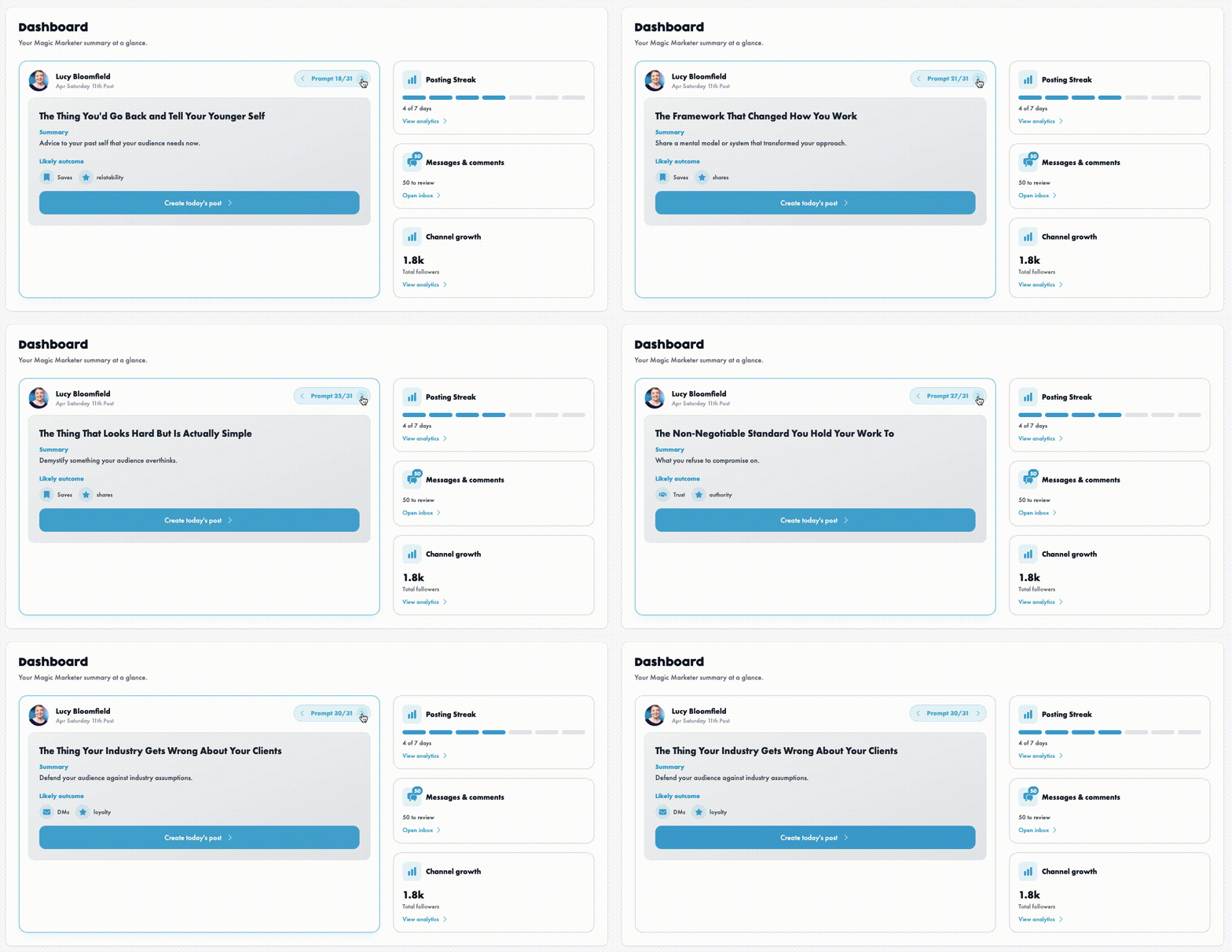
The app didn't replace my judgment; it gave me a rotating set of storytelling rails so I wasn't recycling the same post shape every week.
Analytics — which stories actually worked
After the first week, I stopped treating LinkedIn as a black box. The analytics in the app let me see how posts were performing — reach, engagement, and how each piece compared to the others — so I could connect what I said to what happened.
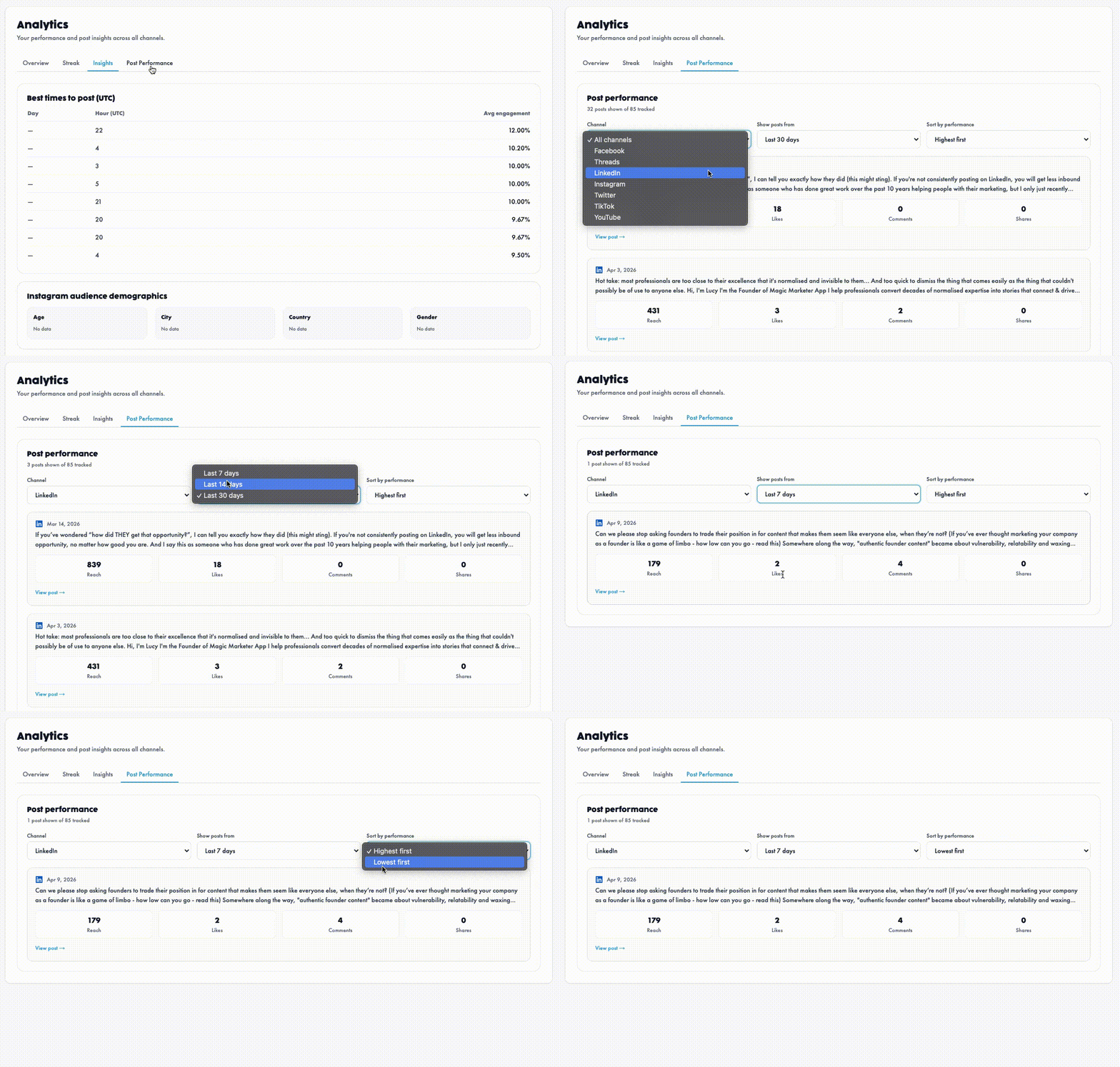
I wasn't optimising for vanity metrics for their own sake. I was looking for patterns: which topics got saves or comments, which ones quietly reached the right people, which formats fell flat. That feedback loop fed back into how aggressively I edited the next day's draft — still true to the prompt, but with a little more of what the data said my audience actually cared about.
Some of the invites and inbound messages didn't tie neatly to a single "winner" post. They often followed a stretch where the numbers and the qualitative signal both said the same thing: the story was landing. The dashboard helped me trust that I wasn't just shouting into the void.
What surprised me
I've been in marketing for over a decade. I know what consistency does. But even I was surprised by how fast it moved when the workflow was this light. When you show up every day with something real to say, the right people notice. Invitations and inbound messages don't always come from the posts you think they will; they come from the pattern of showing up — and analytics helped me see which threads of that pattern were strongest.
What this means for your team
This is what becomes possible when your people stop overthinking and start posting. You don't need a strategist in the room every morning — you need a system that removes the blank screen, keeps publishing simple, and shows what's working so experts can sound like themselves and ship.
If you're leading a firm where the best people should be the most recognised names in your industry, the lever isn't another generic content calendar. It's daily clarity, a three-step path to publish, and feedback from the posts themselves.

Ready to show up consistently?
Daily content for every person on your team — without the blank screen.










Pay monthly. Custom invoicing available for large teams.

About the author
Hello, I'm Lucy Bloomfield — Founder of Magic Marketer
I built Magic Marketer for experts who have something to say but don't want to stare at a blank screen. You've got the experience and the stories; you just need one clear idea a day and a simple way to show up.
My mission is to help 100,000 professionals build visibility and credibility — without turning content into a second job. One decision. Daily results.